Numbers, Teams, & Rules of the Game.
Evaluate the Premier League, European Elite, and more.
Structures, Pressing & Transitions.
The 115 Case and Transfers.
© 2026 I KNOW BALL. ALL RIGHTS RESERVED.
THE ELITE TACTICAL ACADEMY™
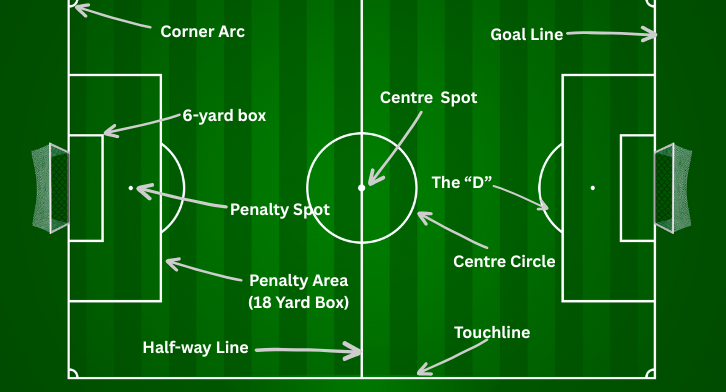
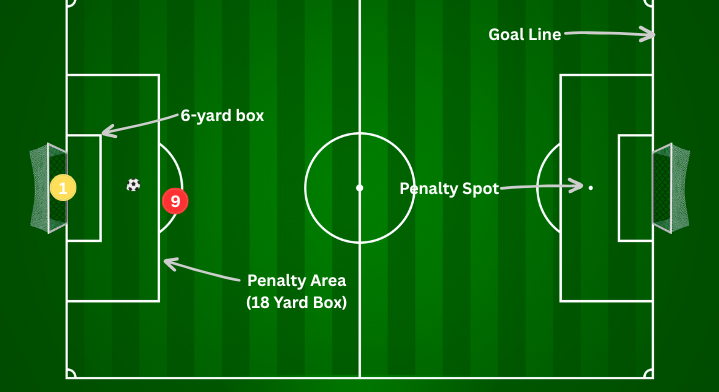
The "Map" of the Game
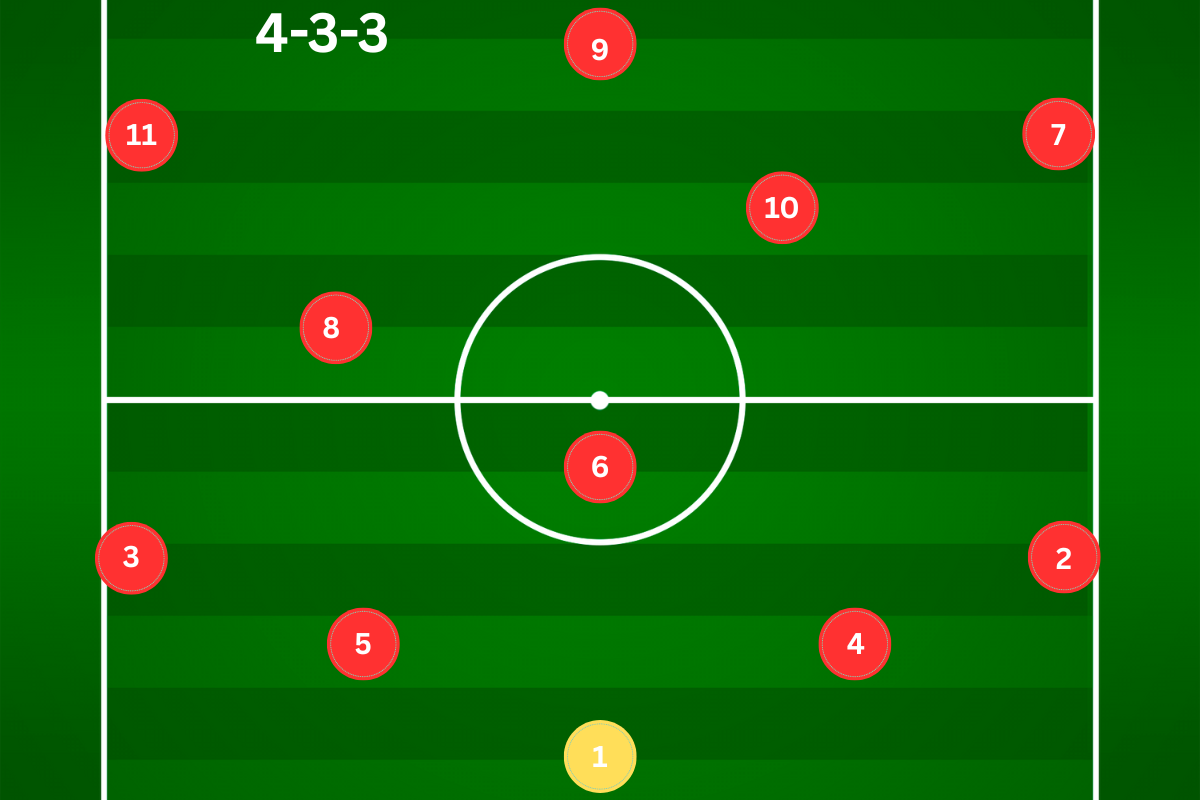
Shirt Numbers & Roles
TV Scoreboard Decoder
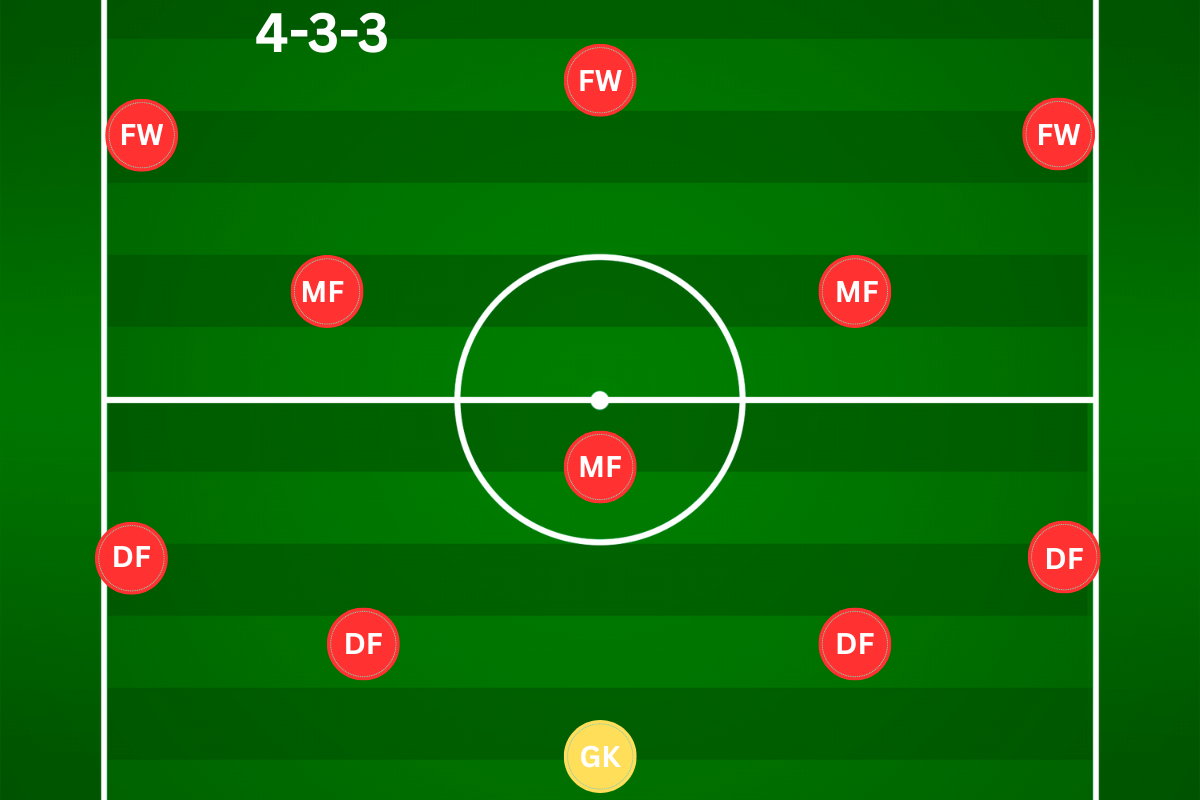
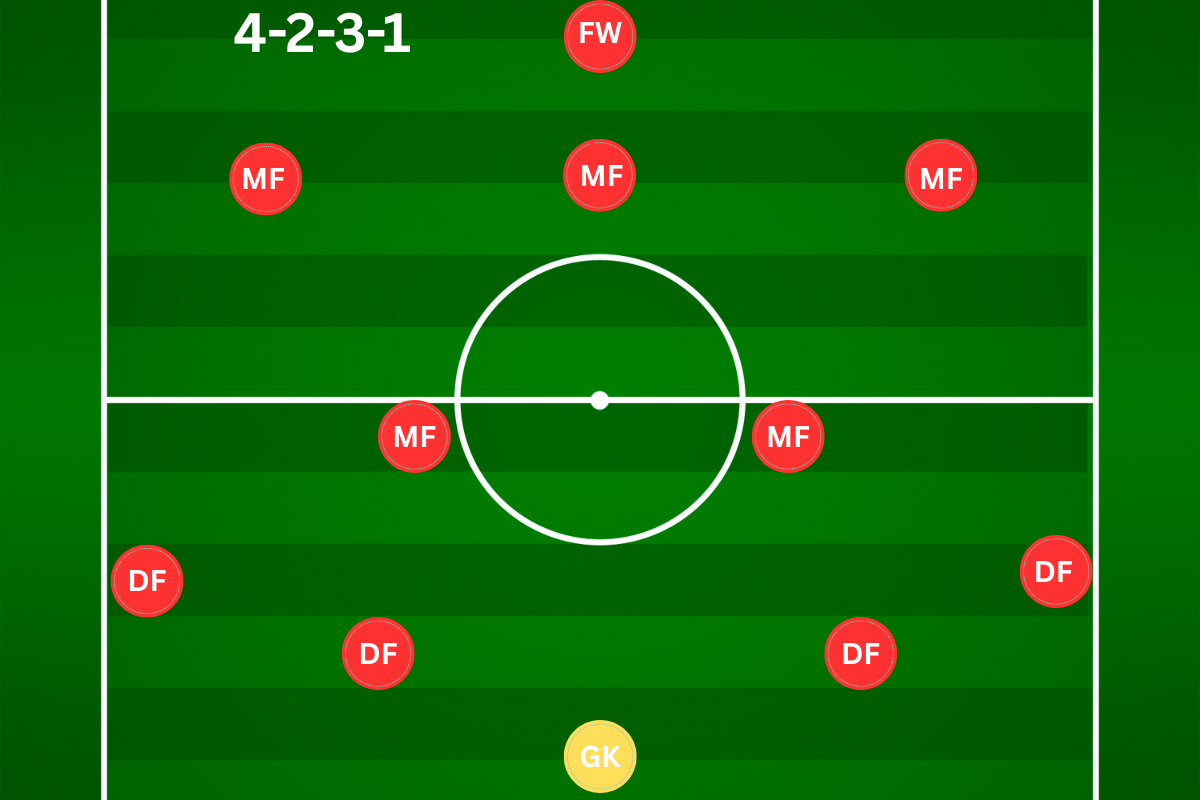
Roles & Formations
Kicks & Corners
The Golden Rule
Unlock Module 2 by proving your Foundation knowledge.
Spain)Legendary Managers: Arsène Wenger, Herbert Chapman
Historic Icons: Thierry Henry, Dennis Bergkamp, Tony Adams
The Intelligence: The only club in the modern era to go an entire 38-game Premier League season without a single defeat, earning the legendary title "The Invincibles" in 2003-04.
Spain)Legendary Managers: Ron Saunders, George Ramsay
Historic Icons: Paul McGrath, Gordon Cowans, Dennis Mortimer
The Intelligence: A founding member of the Football League in 1888 and one of only six English clubs to win the European Cup, lifting the ultimate prize in 1982.
England)Legendary Managers: José Mourinho, Thomas Tuchel
Historic Icons: John Terry, Frank Lampard, Didier Drogba
The Intelligence: The catalyst for the modern "Financial Doping" era. Following Roman Abramovich's takeover in 2003, they shattered spending records to establish themselves as a European superpower.
Netherlands)Legendary Managers: Bill Shankly, Bob Paisley, Jurgen Klopp
Historic Icons: Steven Gerrard, Kenny Dalglish, Ian Rush
The Intelligence: The most successful English club in European history. They are globally famed for the hostile, electric atmosphere at Anfield on European nights.
Spain)Legendary Managers: Pep Guardiola
Historic Icons: Sergio Agüero, Vincent Kompany, David Silva
The Intelligence: Backed by Abu Dhabi wealth and built on Guardiola's tactical perfection, they became the first English team to win four consecutive league titles.
England | Interim)Legendary Managers: Sir Alex Ferguson, Sir Matt Busby
Historic Icons: Bobby Charlton, George Best, Ryan Giggs
The Intelligence: The most commercially successful club in English history. Sir Alex Ferguson built a 26-year dynasty that entirely defined the early Premier League era.
Croatia | Interim)Legendary Managers: Bill Nicholson, Mauricio Pochettino
Historic Icons: Jimmy Greaves, Glenn Hoddle, Harry Kane
The Intelligence: While currently lacking modern silverware, their billion-pound stadium generates immense matchday revenue, cementing their status in the financial elite.
England)Legendary Managers: Sir Bobby Robson, Kevin Keegan
Historic Icons: Alan Shearer, Jackie Milburn, Kevin Keegan
The Intelligence: Following their 2021 takeover by the Saudi sovereign wealth fund, they instantly became the wealthiest club on the planet, disrupting the traditional "Big 6."
Spain)Legendary Managers: Carlo Ancelotti, Zinedine Zidane
Historic Icons: Alfredo Di Stéfano, Cristiano Ronaldo, Zinedine Zidane
The Intelligence: The absolute pinnacle of club football. They possess a unique "Aura" in the Champions League, consistently defying tactical logic to win European Cups.
Germany)
Legendary Managers: Johan Cruyff, Pep Guardiola
Historic Icons: Lionel Messi, Xavi, Andrés Iniesta
The Intelligence: The spiritual home of "Total Football." Their famed La Masia academy produced the greatest generation of technical players in history.
Belgium)
Legendary Managers: Jupp Heynckes, Udo Lattek
Historic Icons: Franz Beckenbauer, Gerd Müller, Philipp Lahm
The Intelligence: The undisputed kings of Germany, known for ruthlessly buying their domestic rivals' best players to maintain a terrifying monopoly.
Spain)
Legendary Managers: Laurent Blanc, Thomas Tuchel
Historic Icons: Zlatan Ibrahimović, Edinson Cavani, Ronaldinho
The Intelligence: Transformed by Qatar Sports Investments. They shattered the world transfer record to sign Neymar, seeking ultimate Champions League glory.
Italy)Legendary Managers: Marcello Lippi, Giovanni Trapattoni
Historic Icons: Alessandro Del Piero, Michel Platini, Gianluigi Buffon
The Intelligence: The most dominant domestic force in Italian history, though their legacy was damaged by the 2006 Calciopoli match-fixing scandal.
Romania)
Legendary Managers: Helenio Herrera, José Mourinho
Historic Icons: Javier Zanetti, Giuseppe Meazza, Lothar Matthäus
The Intelligence: The only Italian club to never be relegated, and the only Italian team to win the historic Continental Treble (2010 under Mourinho).
Italy)
Legendary Managers: Arrigo Sacchi, Carlo Ancelotti
Historic Icons: Paolo Maldini, Franco Baresi, Marco van Basten
The Intelligence: The second most successful club in Champions League history. Their legendary late-80s defensive line is considered the greatest ever assembled.
Argentina)
Legendary Managers: Diego Simeone, Luis Aragonés
Historic Icons: Luis Aragonés, Fernando Torres, Diego Godín
The Intelligence: Under manager Diego Simeone, they forged a terrifying, defensive "Dark Arts" identity that repeatedly broke the Real Madrid/Barcelona monopoly.
Spain)
The Intelligence: Famed for their terrifyingly loud home support and massive traveling away fanbases. They stunned Europe by winning the UEFA Europa League in 2022.
Belgium)
The Intelligence: A club representing an independent microstate. Despite a tiny stadium, they are an elite factory, launching the careers of Thierry Henry and Kylian Mbappé.
Denmark)
The Intelligence: Owned by pharmaceutical giant Bayer AG. Manager Xabi Alonso led them to a historic "Invincible" undefeated domestic double in 2024, destroying the Bayern monopoly.
Croatia)
The Intelligence: Famous for "The Yellow Wall": A 25,000-person standing grandstand. They are globally respected for identifying elite youth (Haaland, Bellingham) and selling them for massive profit.
Portugal)
The Intelligence: The most decorated club in Portugal. Considered the greatest "Selling Club" in world football, generating billions by flipping South American talent to the Premier League.
Portugal)
The Intelligence: A legendary Portuguese talent factory. It is famously the academy where a young Cristiano Ronaldo was developed before his blockbuster move to Manchester United.
Argentina)
Argentina)The Intelligence: Co-owned by David Beckham. The club instantly became a global brand when they secured the signing of Lionel Messi, bringing unprecedented attention and wealth to American soccer.
Saudi Arabia)
Italy)The Intelligence: The most decorated club in Asia. Backed heavily by the Saudi state, they act as the "Real Madrid of the Middle East," attracting massive names like Neymar Jr.
Italy)
Italy)Legendary Managers: Luciano Spalletti
Historic Icons: Diego Maradona, Marek Hamšík, Dries Mertens
The Intelligence: A fiercely passionate club from Southern Italy. Diego Maradona famously led them to glory in the 80s, and they shocked Italy by winning a historic Serie A title again in 2023.
Serbia)
Argentina)The Intelligence: The undisputed Kings of the UEFA Europa League, having won the competition a record 7 times, proving that specialized tournament know-how can overcome financial gaps.
Greece)
Spain)The Intelligence: The most successful club in Greek history. In 2024, they made history by becoming the first Greek team to ever win a European trophy (The UEFA Conference League).
Argentina)
Senegal)The Intelligence: Boasting one of the most intense and intimidating atmospheres in Europe. In 1993, they made history as the first French club to win the Champions League, holding that exclusive honor for over three decades.
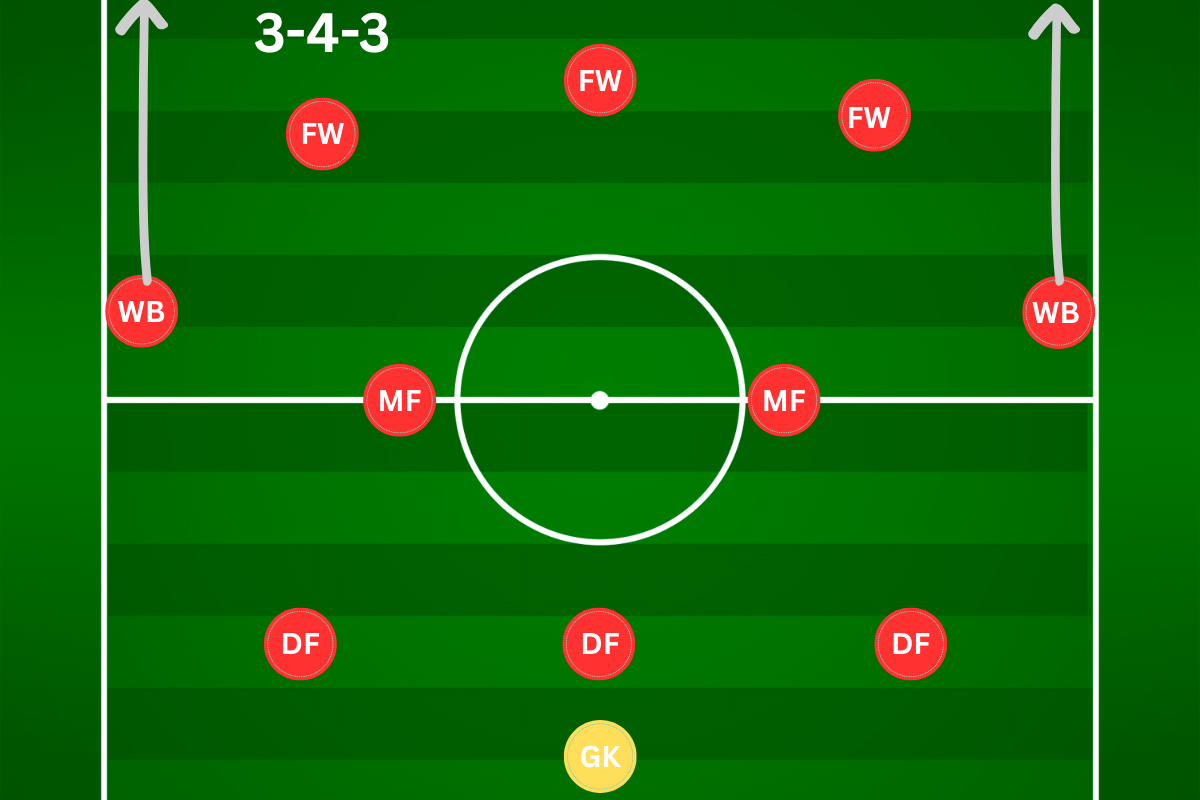
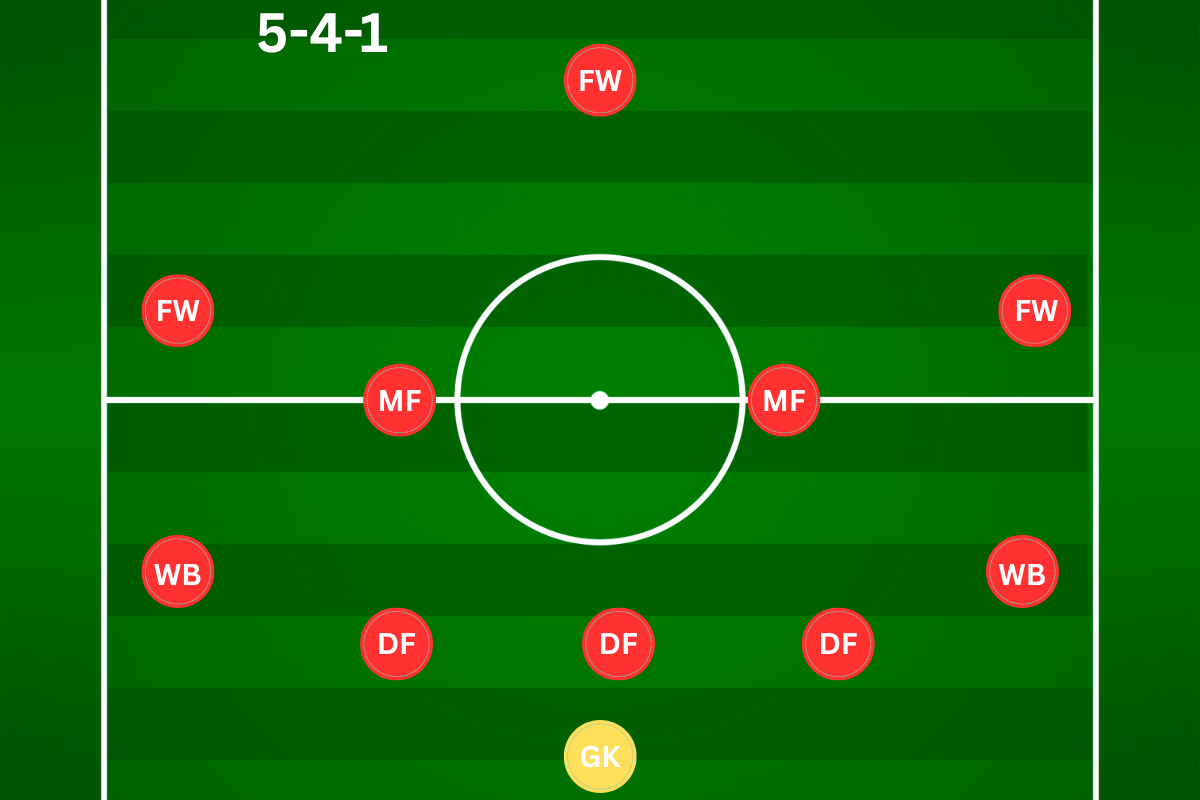
Positions change based on possession. A "3-at-the-back" system transforms into a "5-at-the-back" when defending, as Wing-Backs drop deep.
You are about to begin the Foundation Level exam.
14 / 15 correct answers are required to unlock Module 2.
Points, Tables & Seasons.
Europe's Elite Leagues.
The Most Watched League.
The FA Cup & Wembley.
The Best of the Best.
International Glory.
Unlock Level 3: Tactics!
A standard 20-team league is split into high-stakes "Zones".
Every team plays each other twice (once at home, once away), creating a grueling 38-game marathon.
| POS | TEAM | PTS | STATUS |
|---|---|---|---|
| 1 | Man City | 91 | Champions 🏆 |
| 2 | Arsenal | 89 | Champions League |
| 3 | Liverpool | 82 | Champions League |
| 4 | Aston Villa | 68 | Champions League |
| ... Mid-Table (Safe) ... | |||
| 18 | Luton Town | 26 | Relegated ⬇️ |
| 19 | Burnley | 24 | Relegated ⬇️ |
| 20 | Sheffield Utd | 16 | Relegated ⬇️ |
Each league has "Giants". These are the clubs that have won the most all-time top-flight league titles:
Tactical Data: All-Time Leaders
Its massive financial power is the reason other European giants (like Juventus and Real Madrid) tried to form a breakaway "European Super League"; they simply couldn't compete with the PL's money.
During the 2010s, Spanish clubs like Real Madrid, Barcelona, Sevilla, and Atletico completely dominated Europe, winning multiple Champions League and Europa League trophies between them.
Known for its 50+1 Rule, which ensures fans (club members) hold the majority of voting rights. This keeps ticket prices low and prevents billionaires from taking full control.
Its dominance only faded after the Calciopoli scandal in 2006 (match-fixing), where champions Juventus were stripped of the title, relegated to Serie B and faced a points deduction. This allowed the Premier League to take the top spot.
It develops elite stars like Mbappé and 2025 Ballon d'Or winner Ousmane Dembélé, who often move abroad to other Big Five leagues to peak in their careers.
Sir Alex Ferguson managed Manchester United from 1986 to 2013 (26 years). He rebuilt the club from the ground up, famously utilizing youth academy products known as the "Class of '92" (including David Beckham and Paul Scholes).
Managed by Arsène Wenger, Arsenal achieved something thought impossible in the modern era: 26 wins, 12 draws, 0 losses.
Star Player: Thierry Henry scored 30 league goals, utilizing lethal pace and technical brilliance drifting in from the left wing.
They received a special gold Premier League trophy to commemorate the achievement.
José Mourinho arrived at Chelsea declaring himself "The Special One" and immediately built the greatest defensive unit in Premier League history.
Just one year after narrowly avoiding relegation, Claudio Ranieri's Leicester City shocked the sporting world.
Powered by N'Golo Kanté in midfield, Riyad Mahrez's relentless pressing, and Jamie Vardy's 24 goals, they proved that tactical unity could still beat financial dominance.
Pep Guardiola's Manchester City utterly destroyed the league, setting multiple records that still stand:
Gabriel Jesus scored a 94th-minute winner on the final day against Southampton to secure exactly 100 points.
| Player Identity | Goals |
|---|---|
| 1. Alan Shearer | 260 |
| 2. Harry Kane | 213 |
| 3. Wayne Rooney | 208 |
While the League is a 38-game marathon, the Cup is a knockout sprint. Founded in 1871, it is the oldest national football competition in the world.
Arsenal hold the absolute record for the most FA Cup victories. Legendary manager Arsène Wenger won 7 of these during his tenure, making him the most successful manager in the competition's history.
Liverpool were the dominant force in Europe, playing beautiful, flowing football. Wimbledon (nicknamed "The Crazy Gang" due to their aggressive, bruising tactics) stunned them 1-0.
It remains one of the greatest culture clashes and upsets in English football history.
Winning both major domestic trophies requires incredible squad depth, balancing the 38-game marathon of the league with the intense, sudden-death sprint of the FA Cup knockout rounds.
Winning the domestic league, the main domestic cup, and the premier European competition is the ultimate test of depth and tactical mastery.
Starting in the 2024/25 season, the traditional group stage was replaced by a League Phase:
FINAL STANDINGS: LEAGUE PHASE
| ROUND OF 16 | ||
|---|---|---|
| Position | Club | Points |
| 1 | Liverpool | 21 |
| 2 | Barcelona | 19 |
| 3 | Arsenal | 19 |
| 4 | Inter Milan | 19 |
| 5 | Atlético Madrid | 18 |
| 6 | B. Leverkusen | 16 |
| 7 | Lille | 16 |
| 8 | Aston Villa | 16 |
| PLAY-OFFS | ||
|---|---|---|
| Position | Club | Points |
| 9 | Atalanta | 15 |
| 10 | Dortmund | 15 |
| 11 | Bayern | 15 |
| 12 | Real Madrid | 15 |
| ... 13 to 24 ... | ||
| ELIMINATION | ||
|---|---|---|
| Position | Club | Points |
| 25 | Dinamo Zagreb | 11 |
| 26 | Stuttgart | 10 |
| ... 27 to 34 ... | ||
| 35 | S. Bratislava | 0 |
| 36 | Young Boys | 0 |
| Club Identity | Trophies |
|---|---|
| Real Madrid | 15 |
| AC Milan | 7 |
| Liverpool / Bayern Munich | 6 |
*Tactical Data: All-Time Leaders.
Johan Cruyff's Barcelona were expected to win easily. Missing their starting centre-backs, Milan executed a flawless counter-attacking strategy under Fabio Capello, completely destroying the Dream Team.
Bayern Munich dominated and led until the 91st minute. Substitutes Teddy Sheringham and Ole Gunnar Solskjær scored from two David Beckham corners in injury time, creating the most dramatic turnaround in history.
Facing a legendary AC Milan squad, Liverpool were 3-0 down. Driven by captain Steven Gerrard, Liverpool scored 3 goals in 6 manic second-half minutes and won the shootout thanks to keeper Jerzy Dudek.
Atletico Madrid were seconds away from winning their first UCL. In the 93rd minute, Sergio Ramos scored a bullet header. Real Madrid dominated extra time, finally securing their obsessed-over 10th European Cup.
| Player Identity | Goals |
|---|---|
| 1. Cristiano Ronaldo | 140 |
| 2. Lionel Messi | 129 |
| 3. Robert Lewandowski | 107 |
*Robert Lewandowski remains an active threat in Europe, continuing to push his total higher in the all-time scoring ranks.
Held every 4 years, it is the pinnacle of international football.
Over 200,000 confident fans packed the stadium expecting a Brazilian coronation. Uruguay won 2-1, creating a trauma in Brazilian football culture so deep that they completely changed their kit colors to the famous Yellow and Green afterward.
England's only World Cup victory was secured by Geoff Hurst's hat-trick, including a highly controversial goal that bounced down off the crossbar.
In the space of four minutes against England, Diego Maradona showed both sides of his character. First, he illegally punched the ball into the net (The Hand of God). Then, he dribbled past five English players from his own half to score the greatest goal in World Cup history.
In his final ever match, French legend Zinedine Zidane scored a panenka penalty, but was later sent off in extra time for viciously headbutting Italian defender Marco Materazzi in the chest. Italy went on to win the shootout.
Hosting the tournament, Brazil were favorites. Without Neymar, they faced Germany in the semi-final. Germany scored 4 goals in a 6-minute spell during the first half, utterly dismantling the hosts 7-1 in the most shocking result in modern international football.
| Player Identity | Goals |
|---|---|
| Miroslav Klose (Germany) | 16 |
| Ronaldo (Brazil) | 15 |
| Gerd Müller (Germany) | 14 |
*Active global icons like Lionel Messi and Kylian Mbappé continue to climb the all-time tournament scoring charts.
You are about to begin the Pro Level evaluation.
14 / 15 correct answers are required to unlock Level 3: Tactics.
Structures, Pivots & Half-Spaces
Traps, Triggers & The High Line
The Spider Web & Verticality
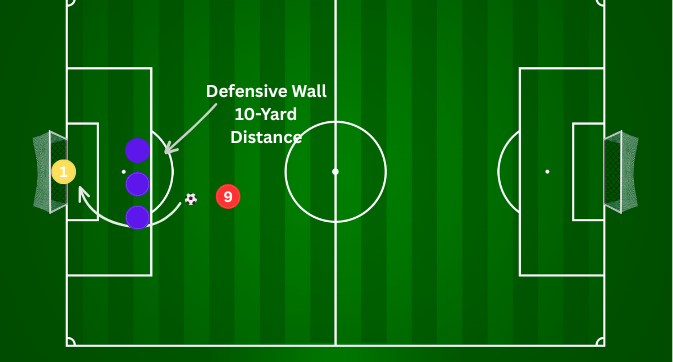
Screening & Dead-ball Physics
Fluidity, Rotations & The Brain
Unlock Level 4: Mogul Status!
You are about to begin the Tactician Level evaluation.
14 / 15 correct answers are required to unlock Level 4: Mogul.
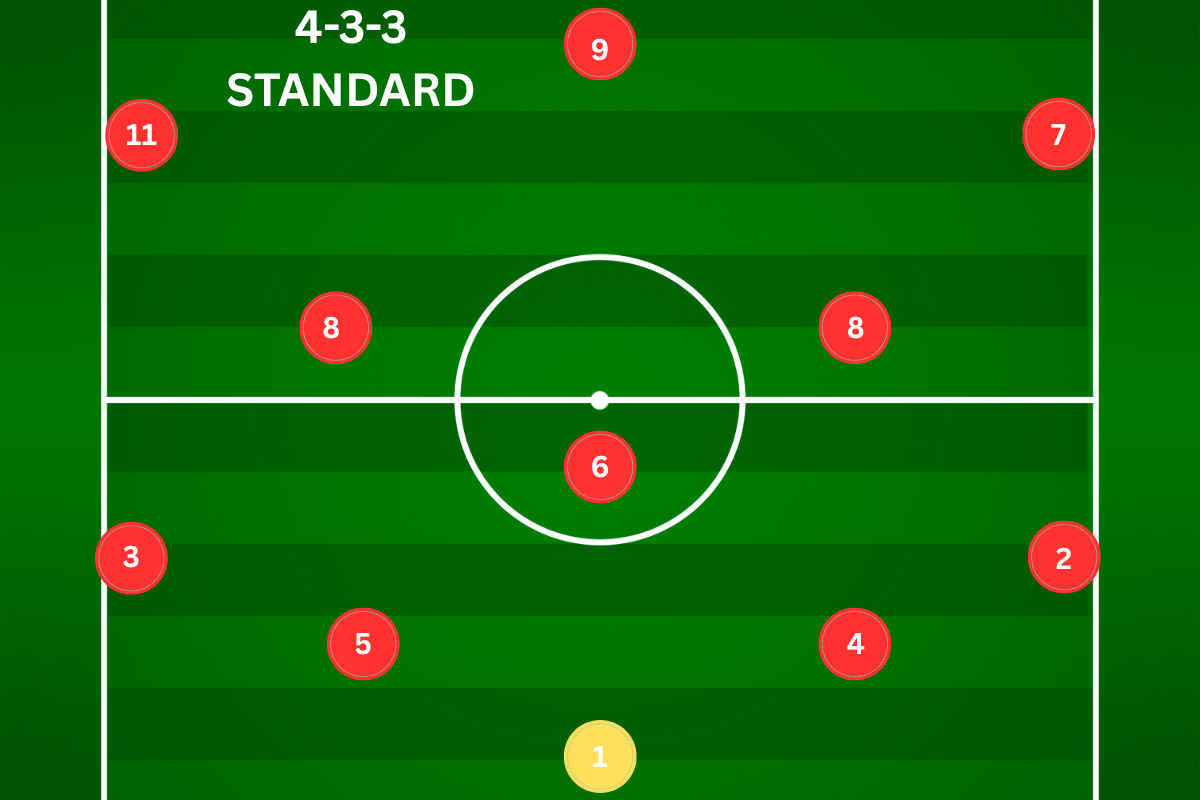
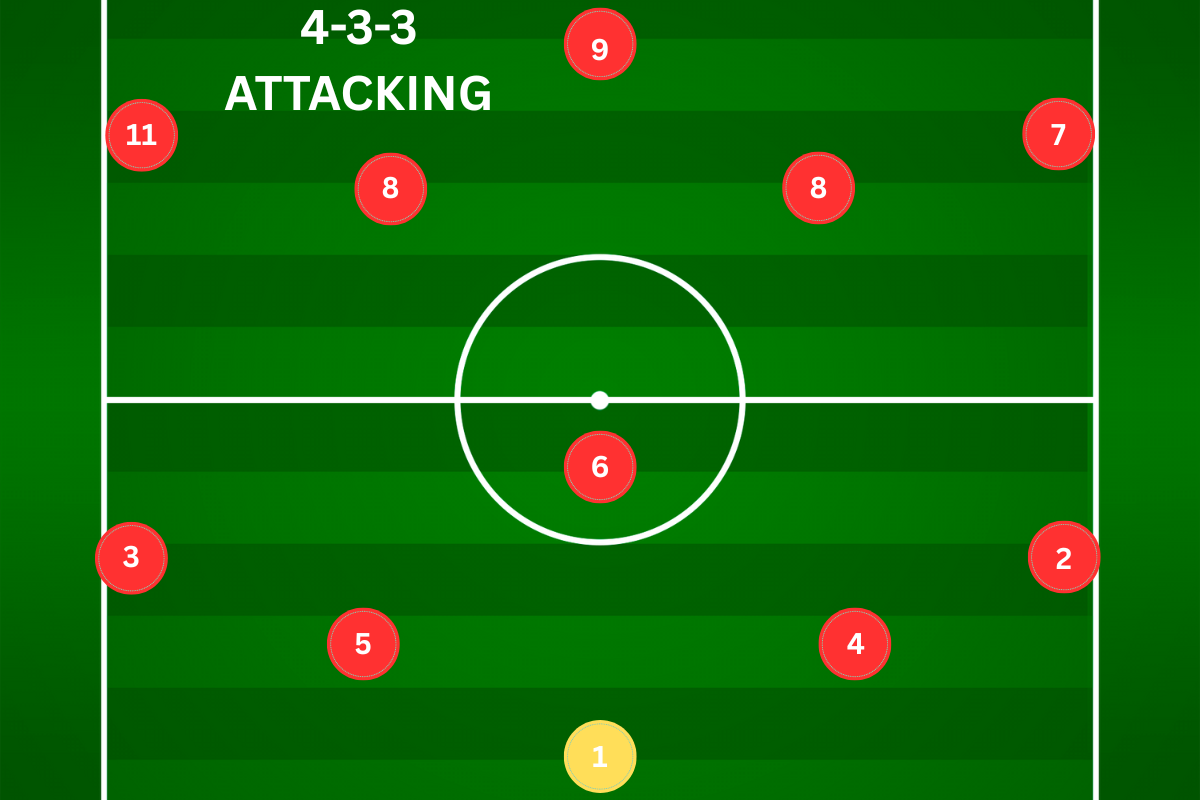
Wide forwards play high and wide to stretch the defence, isolate full-backs, and create 1v1 chances.
A specialist striker who deliberately abandons the traditional center-forward position to drop deep into the midfield.
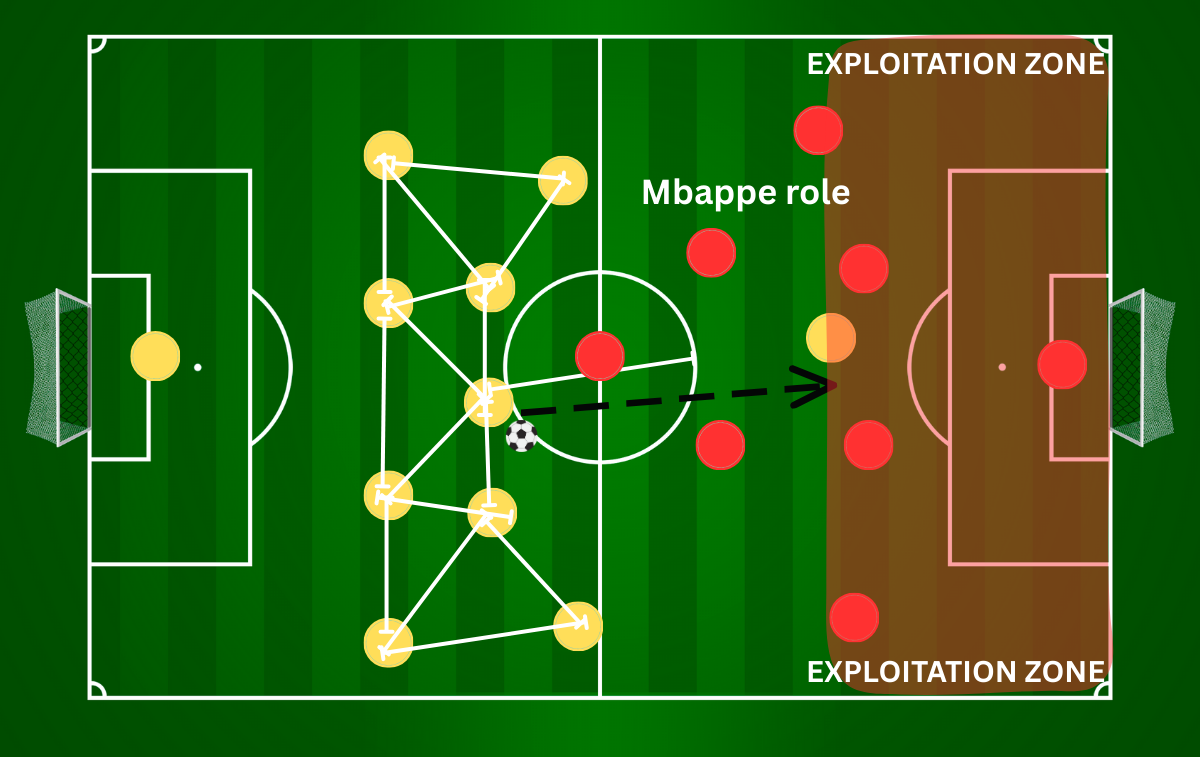
The Intelligence: By dropping deep, the False Nine forces opposing Centre-Backs into a lose-lose decision: follow the striker and leave a massive gap in the defensive line for wingers to exploit, or hold the line and allow the striker to turn and dictate play with a numerical overload in midfield.
| Era | Player Profile |
|---|---|
| Historical Pioneers | L. Messi / R. Firmino Perfected the role by destroying man-marking and acting as the tactical glue. |
| Modern Evolution | Harry Kane The ultimate "9.5". Combining elite deep playmaking with traditional finishing. |
The standard for balance: two anchors protect the defence while three creators operate between lines.
Modern elite systems use the 3-4-3 / 5-4-1 hybrid to control transition moments. This requires players (specifically Wing-Backs) to possess an "Elite Engine" - the stamina to cover the full pitch length for 90 minutes as they shift roles.
An aggressive defensive system where the team stays extremely high up the pitch to win the ball back near the opponent's goal.
The touchline is the only defender that never misses a tackle. By "shepherding" an opponent toward the side, the pressing team cuts passing options in half.
To press high, defenders must sit at the halfway line, creating a "Green Ocean" of space behind them.
Requirement: You cannot play this way if your defenders are slow. You need "Elite Recovery Pace" from Centre-Backs like Saliba (ARS) or Pacho (PSG) to track long balls.
Unlike the High Press, a Mid-Block doesn't hunt the ball aggressively. The team sits in a compact shape around the centre circle, waiting for the opponent to make a mistake.
While some press high, others "Park the Bus". A Low Block involves defending very deep near your own penalty area to deny any space behind.
The ultimate antidote to the High Press. Rather than risking possession near their own goal, teams kick the ball long, bypassing the midfield entirely.
The Intelligence: If an elite opponent commits 6 players forward to aggressively press you, a single accurate long ball completely removes them from the game. By aiming for a "High Outlet" player in the "Green Ocean", you flip the opponent's aggressive trap against them in one pass.
The most dangerous moment in football is the 3 seconds immediately after possession changes hands. Defences are expanded and utterly disorganized.
The Intelligence: Elite captains possess Transition Intelligence and must instantly read the game state to dictate the tempo:
Elite teams use this window to pass Vertical (forward) instantly to catch the opponent while they are still expanded and disorganised.
Exploiting this window with a rapid, vertical offensive transition is commonly known in football as a Counter-Attack.
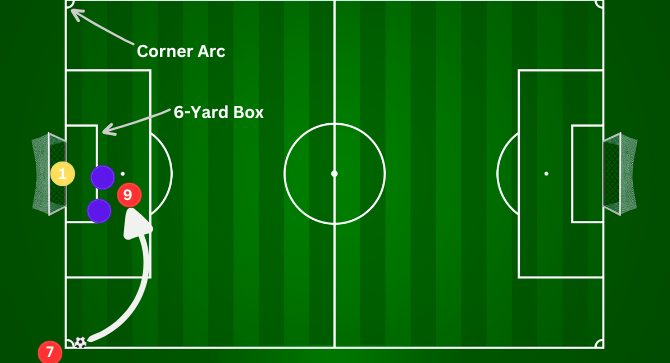
Elite clubs have realized that set plays are the most efficient way to break a deadlock. Modern giants like Arsenal now score nearly 30% of their goals from dead-ball situations.
These routines are categorized as "Dead Balls" because open play has completely stopped, and the ball is totally stationary before the tactical restart begins.
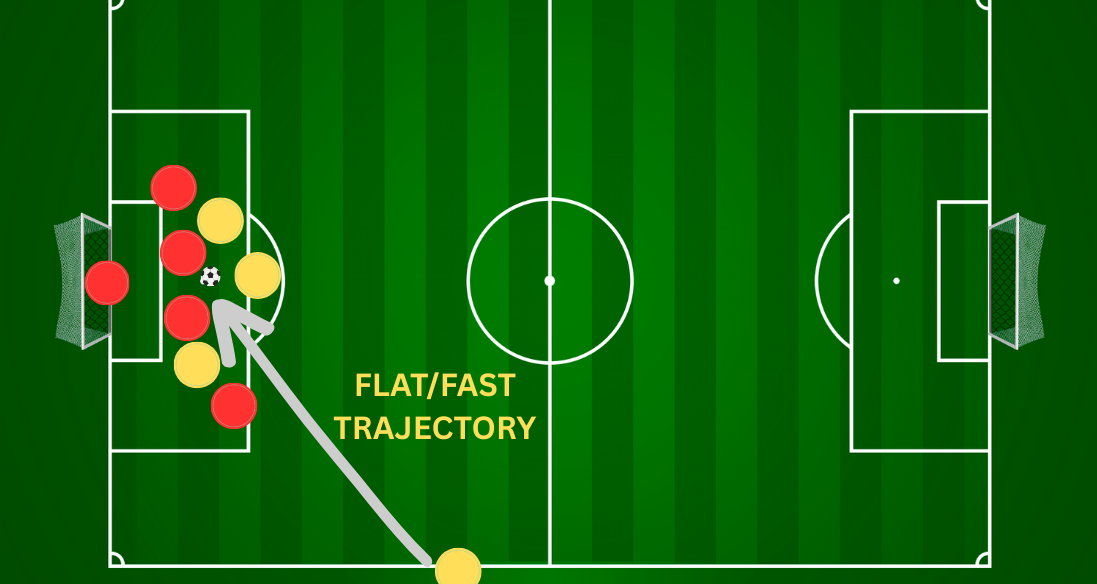
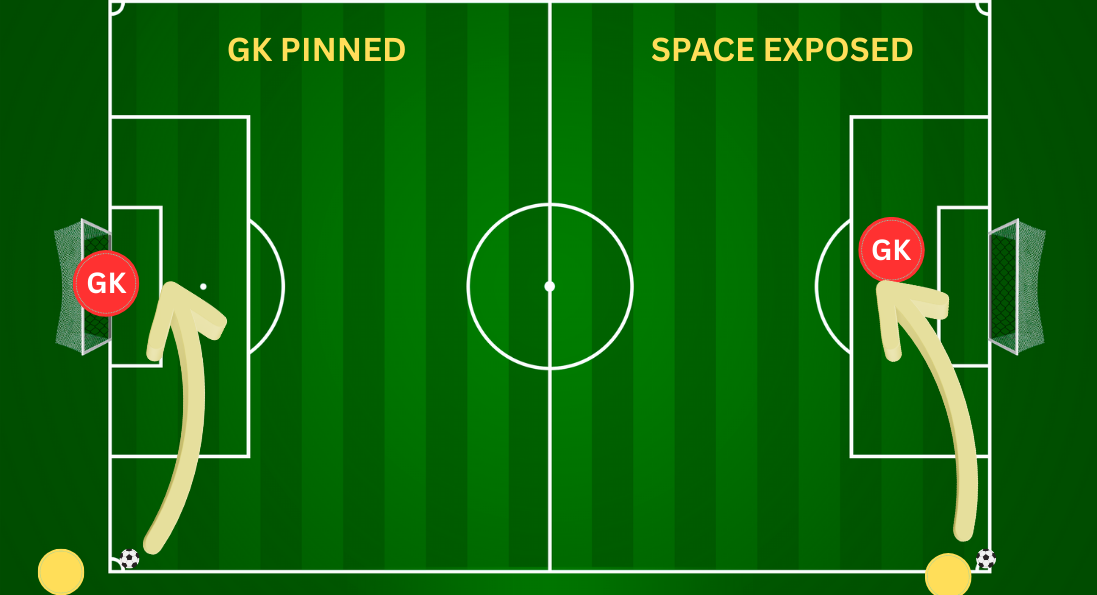
The curve of the ball dictates the panic. Analysts choose delivery based on the opponent's defensive height.
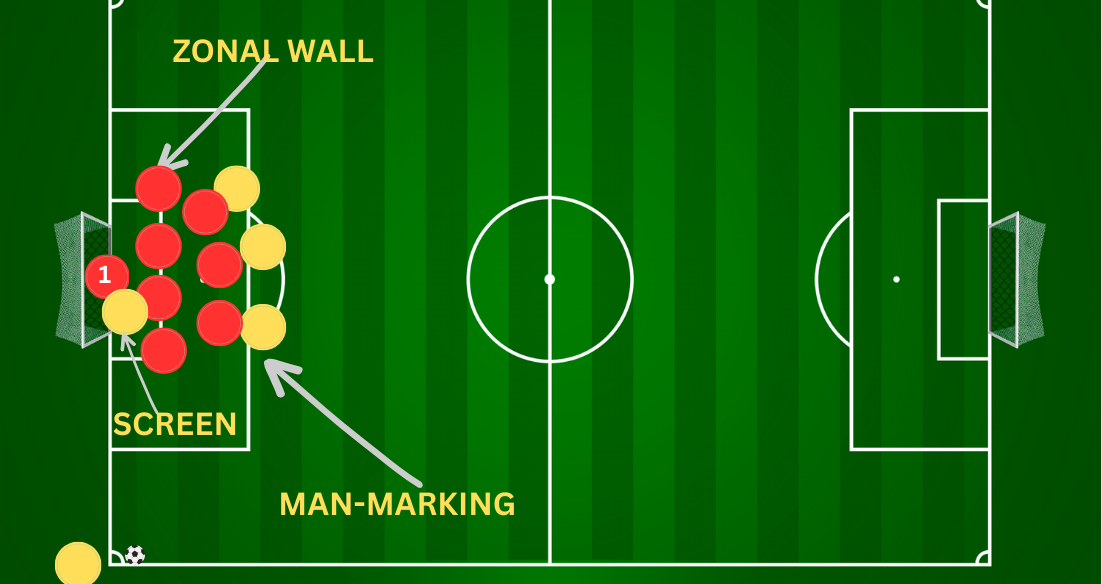
Attackers use Screening to legally obstruct the keeper’s path. By delaying the keeper’s reaction, the offence gains a massive aerial advantage.
The Legal Boundary: Simply standing your ground is completely legal. Screening is only penalized as a foul if the attacker actively holds, pulls, or pushes the goalkeeper.
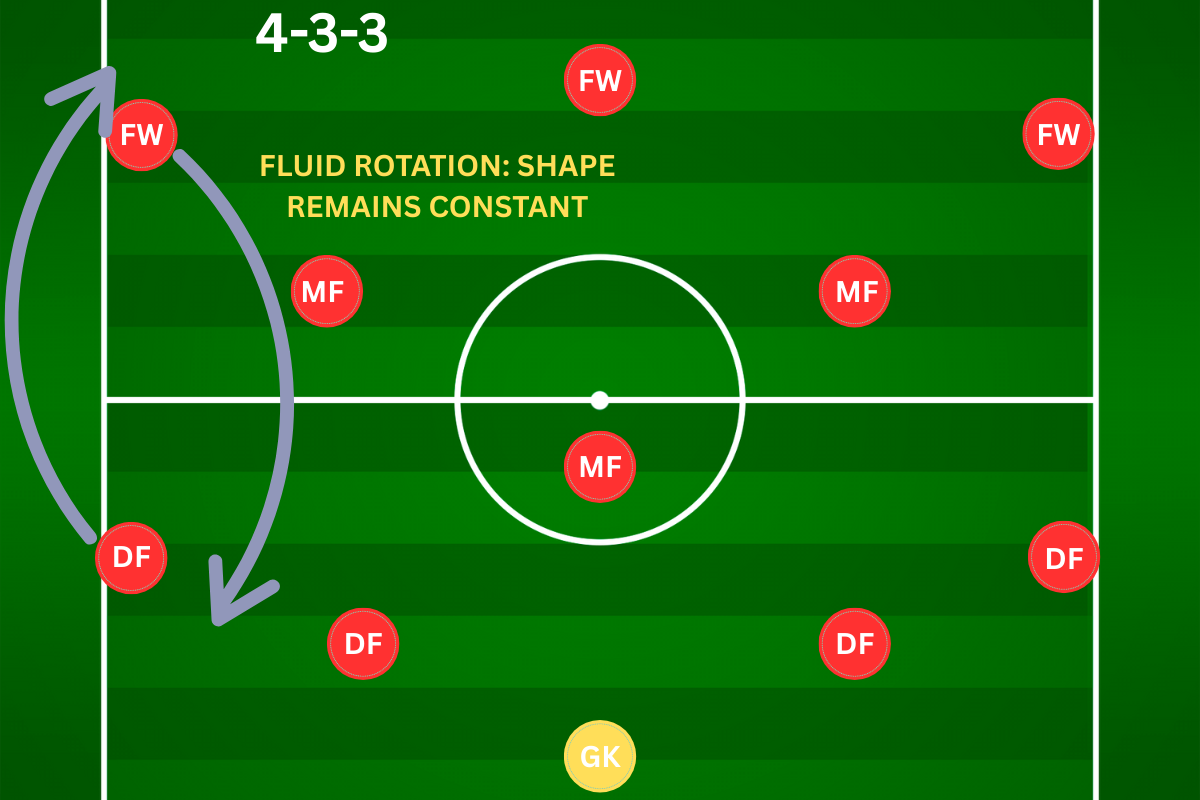
Founded by Rinus Michels and Johan Cruyff, Total Football suggests that the pitch is a flexible area. The goal is to expand space when attacking and contract it when defending.
This system requires Clockwork precision. If a defender pushes forward, a midfielder must drop to cover. This requires absolute precision and tactical intelligence to keep the shape constant.
This system relies heavily on Technical Centre-Backs who possess the playmaking ability to build attacks from the defence.
Pep Guardiola, a disciple of Cruyff, evolved these ideas into the modern Juego de Posición (Positional Play) seen at Manchester City today.
Total Football is not just a tactic; it is an ideology passed down through generations. What began with Rinus Michels and Johan Cruyff at Ajax, and was further developed at Barcelona, has evolved into modern Positional Play.
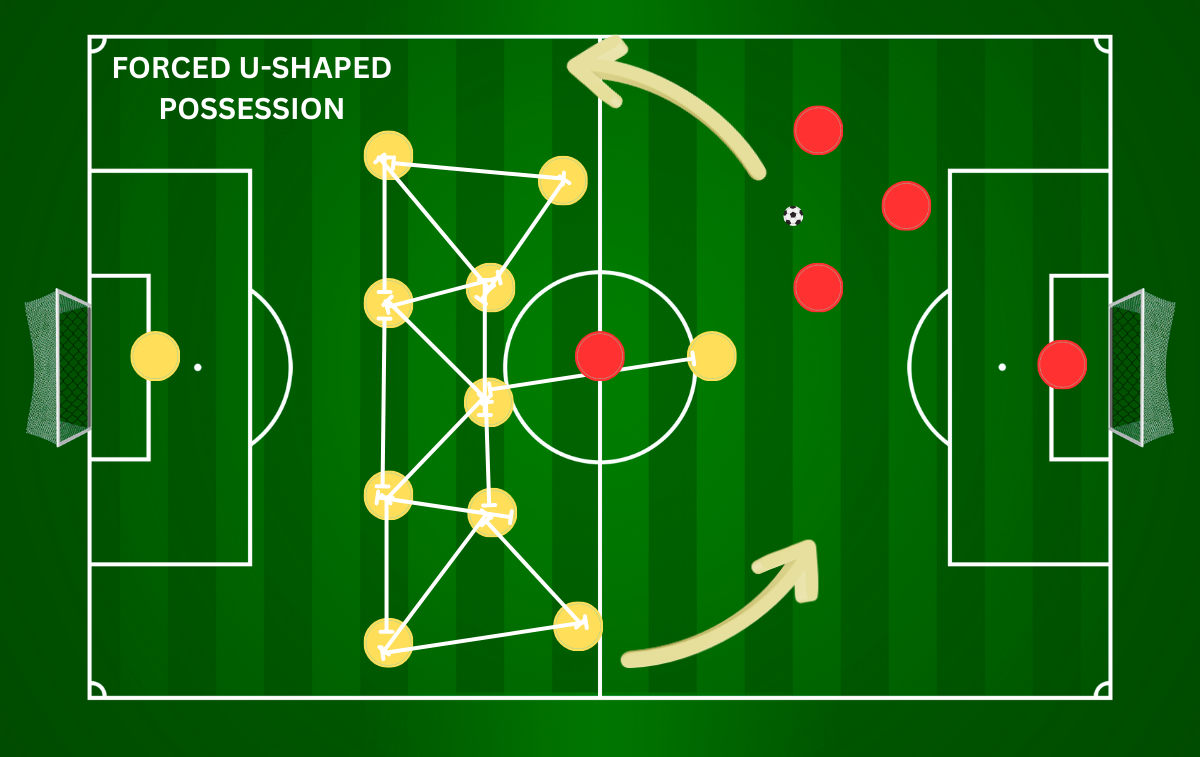
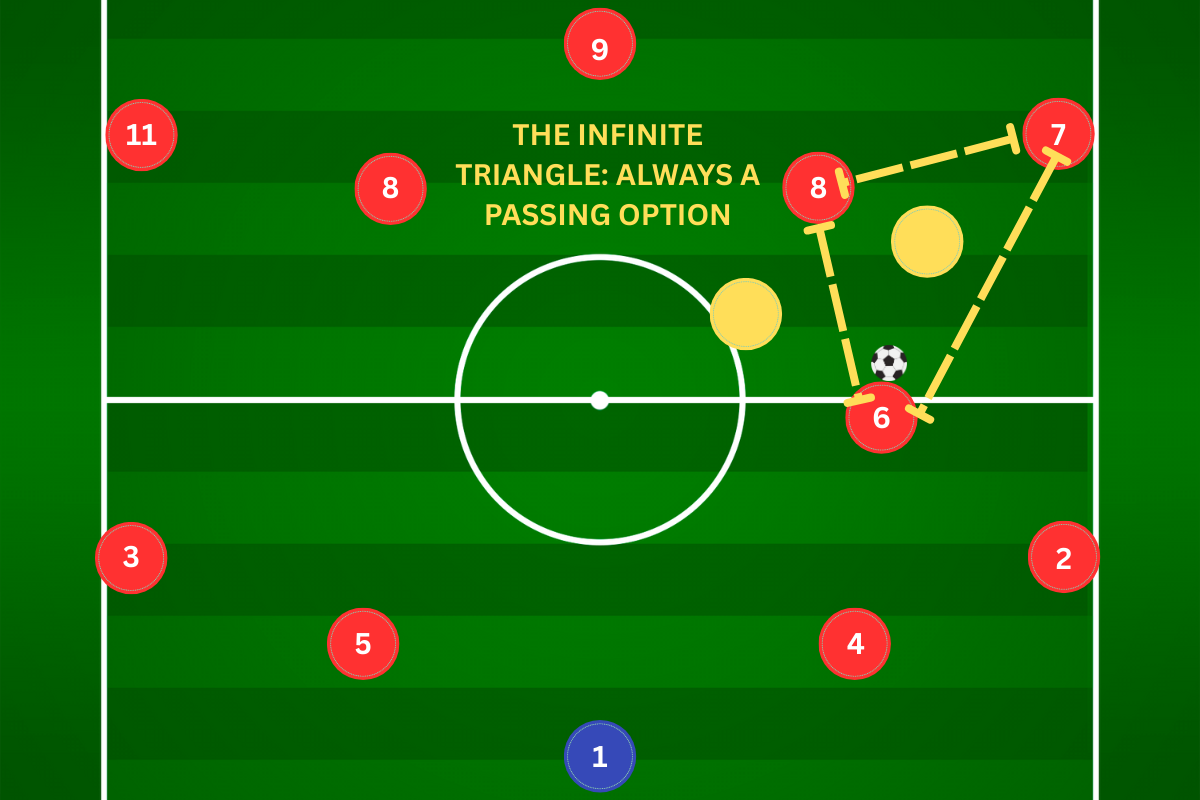
The Intelligence: Pep Guardiola (a direct disciple of Cruyff), weaponized this philosophy at Manchester City. The system relies on building "Infinite Triangles", ensuring the ball carrier always has at least two passing options, allowing the team to suffocate opponents through pure possession.
The Third Man Run: The pinnacle of this geometry. Player A passes to Player B, drawing the defense's attention, while Player C (Third Man) makes an untracked, lethal run into the vacated space.
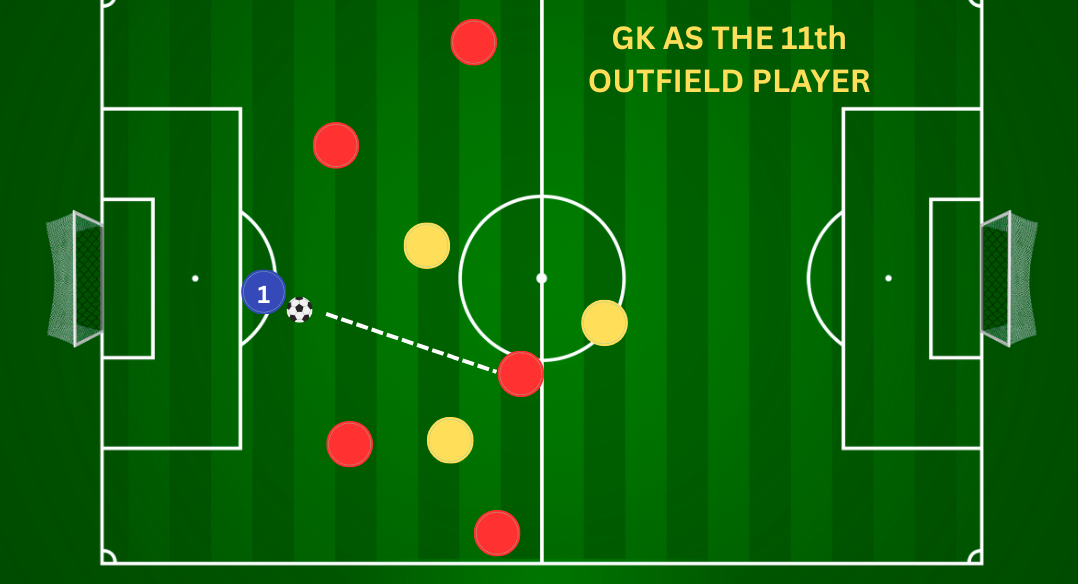
The Goalkeeper is no longer just a shot-stopper. In elite tactical systems, they act as the 11th outfield player.
The Intelligence: By stepping out of the penalty box to participate in the build-up phase, the keeper creates a permanent numerical advantage against the opponent's press. Defensively, they sweep up long balls played into the "Green Ocean", enabling the rest of the team to push their High Line safely to the halfway mark.
Windows & Deadline Day
State-Owned Club Power
The Man City "115" Case
The Chelsea Loophole
The "English Tax" & Bosman
Unlock the Final Badge!
In the transfer market, you aren't "buying" a human; you are buying the exclusive legal right to register that player. This registration is a digital asset.
Player valuations do not follow normal inflation. The World Record Fee doubles roughly every 8-10 years due to TV revenue increases.
| ERA | PLAYER | RECORD FEE |
|---|---|---|
| 1979 | Trevor Francis | £1m |
| 1996 | Alan Shearer | £15m |
| 2009 | Cristiano Ronaldo | £80m |
| 2017 | Neymar | £198m |
Visualiser: The World Record Timeline
Amateurs look at the transfer fee. Moguls look at the Total Package.
(Weekly Wage × 52 Weeks) × Contract Years
Ownership has evolved from wealthy fans to global superpowers.
Owned effectively by nation-states (UAE, Saudi Arabia, Qatar), these clubs operate with virtually unlimited capital.
The Intelligence: The primary goal isn't necessarily annual operating profit. It is Soft Power, using the global popularity of the Premier League and Champions League to normalize and improve the public image of their respective nations on the world stage.
American private equity firms treat football clubs like massive corporate assets, focusing heavily on data analytics, global merchandise, and stadium expansion.
The Intelligence: Their goal is strict ROI (Return on Investment). They aim to buy a club, massively increase its global commercial revenue, and eventually sell the franchise for billions more than they paid for it.
The smartest Moguls don't buy one club; they buy a network.
The Premier League currently operates under PSR rules. The golden number is £105m. Clubs cannot lose more than this amount over a rolling 3-year period.
Manchester City face "115" charges from the Premier League spanning from 2009 to 2018.
The Allegation: The core accusation is that City's owners bypassed the £105m loss limit by artificially inflating sponsorship deals with UAE-based companies, funneling owner wealth directly into the club while disguising it as legitimate commercial revenue.
In the 2023/24 season, the Premier League proved they were no longer messing around with accounting leniency.
The Intelligence: Both Everton and Nottingham Forest were found guilty of exceeding the £105m loss limit. Instead of just a fine, they were hit with immediate Points Deductions, proving that boardroom failures directly impact survival on the pitch.
Why are clubs selling their "Local Lads"? The answer lies in the accounting books. Selling a player you bought is different from selling one you made.
| SCENARIO | SOLD FOR | BOOK COST | PSR PROFIT |
|---|---|---|---|
| Sell Bought Star (Bought for £50m) |
£50m | -£50m | £0 |
| Sell Academy Kid (Cost £0 to build) |
£35m | £0 | +£35m |
Visualiser: Why Local Players Are Sacrificed
The financial year ends on June 30th. If you are over the £105m loss limit on June 29th, you have 24 hours to save the club.
From the 2026/27 season, PSR is replaced by SCR (Squad Cost Ratio). This aligns with UEFA and is harder to cheat.
Clubs are allowed to exceed the 85% limit (up to 115%) to allow for "Investment ahead of revenue," but there is a catch.
When a club signs a player for £100m on a 5-year contract they do not record a £100m loss immediately. Instead, the fee is spread evenly: £20m per year. This is Amortisation.
| TIMELINE | BOOK VALUE | ANNUAL COST |
|---|---|---|
| SIGNING DAY | £100m | - |
| End of Year 1 | £80m | £20m |
| End of Year 2 | £60m | £20m |
| End of Year 3 | £40m | £20m |
| End of Year 4 | £20m | £20m |
| End of Year 5 | £0m (Free) | £20m |
How did Chelsea spend £1bn without breaking rules? They exploited contract length.
Elite clubs sell when a player's Book Value is low but their Market Value is high.
Liverpool bought Philippe Coutinho for just £8.5m. By 2018, his remaining Book Value on the accounting ledgers was near zero.
The Intelligence: When Barcelona bought him for £142m, almost the entire fee was recorded as "Pure Profit". Liverpool used this massive accounting windfall to legally fund the transfers of Virgil van Dijk and Alisson Becker without breaching FFP limits.
Amortisation protects you, until a player's performance collapses.
Imagine signing a star for £60m on a 5-year deal. After 2 years, his performances are terrible; in football terms, the player has become a "flop". His Book Value is still £36m, but no one wants him. His actual Market Value crashes to £20m.
The Intelligence: If you sell him for £20m, you must record an immediate £16m Accounting Loss (£20m Sale - £36m Book Value). Because clubs can't afford this FFP hit, they are forced to keep deadwood players on the bench, creating a toxic "Wage Trap".
The Premier League has a strict limit: A squad can have a maximum of 25 players over the age of 21. Of these, at least 8 must be Homegrown (HG).
It does not mean English. Nationality is irrelevant.
Before 1995, clubs held absolute power. They retained a player’s registration even after their contract expired, meaning players couldn't leave without a transfer fee.
A player whose contract has completely expired and is without a club is known in the industry as a "Free Agent".
Jean-Marc Bosman sued his club, arguing this violated European Union labor laws (freedom of movement).
The Intelligence: The court ruled in his favor. Out-of-contract players can now leave for £0 (Free Transfer). This permanently shifted the power dynamic in global football from the clubs directly to the players and their agents.
"Free Transfers" are never actually free. The money the buying club saves on a transfer fee simply goes into the player's pocket instead.
In 2024, Real Madrid signed Kylian Mbappé from PSG after his contract expired.
The Intelligence: Because there was no transfer fee paid to PSG, Mbappé's camp held all the leverage. They demanded a reported €100m+ Signing Bonus just for putting pen to paper. The cost to the club remains astronomical; it is simply categorized differently on the balance sheet.
Elite clubs treat contract length as a ticking clock. Managing this timeline is the difference between a £100m sale and a £0 exit.
You are about to attempt the final certification.
15 / 15 (100%) is required for Mogul status.
Analysis complete.
Complete the previous module to unlock this content.
CHECKING DECISION...
DECISION: NO GOAL
(Check the box to stay onside)
Your exam score dictates your squad status and module progression.
Score: 15/15 (Module 4). The ultimate certification. You run the club.
Score: 15/15 (Modules 1-3). You have demonstrated elite tactical mastery.
Score: 14/15. You have proven basic competence and unlocked the next module.
Score: < 14. You are on the bench. You must study the scouting reports and retake the exam.
You have mastered the pitch, the tactics, and the boardroom.
Welcome to the Elite.
Understand the Laws of the Game before stepping onto the pitch.